About Christianity – Helping others understand God by exploring who God is and the practical difference it makes in our everyday lives.
Showing posts with label Words. Show all posts
Wednesday, July 3, 2019
Mistakes Were Made But Not by Me
I blew it; I never should have said that! Have you ever felt bad about something you’ve said or done and wish you could take it back? Sure you have. We all have. Sadly, I’ve said things to people that weren’t said in love. It might have been true, but it wasn’t said in the right way.
The timing of my rationalized, yet hurtful words was bad. The person was too emotionally raw to hear my words. If you’ve ever put your foot in your mouth and regretted it you know what I mean. We might think that our words were reasonable and completely justified. After all, the words were true, didn’t they 'get it' are they really that ‘clueless’?
Here’s the hard part for many. We might have had the right intention, but the impact of our words or actions was not what we hoped for.
Unfortunately, unkind words and actions have caused the end of personal relationships and strained international relationships as well. See James 3:5-10
It’s going to be hard now after what I’ve said. What can I do now to make things better? I can apologize and say, “I’m sorry.” It sounds easy, but why is it so hard for so many to say that? Maybe it’s because we don’t really think we made a mistake?
In the fascinating and well researched book, Mistakes Were Made, (but not by me): Why We Justify Foolish Beliefs, Bad Decisions, and Hurtful Acts the authors explore people’s strong need for self-justification and the serious consequences.
“Why do people dodge responsibility when things fall apart? Why the parade of public figures unable to own up to the huge implications of their decisions when they screw up? Why the endless marital quarrels over who is right? Why can we see hypocrisy in others but not in ourselves? Carol Tavris and Elliott Aronson
This self deception is seen in the words from the British politician, Lord Molson (1903-1991), "I will look at any additional evidence to confirm the opinion to which I have already come." See Jesus’ parable the Mote and the Beam.
Have you ever noticed some people have 20/20 vision for faults and flaws and misdeeds of others but, complete myopia when it comes to themselves? Not you, of course, but some people do.
It's somebody else who has the problem.
In other words, the truth is we don’t see our blind spots, but others do. Other people know. They talk about it with each other, but this is just true for all of us, part of the human condition. Like the garden of old we confidently find fault with others, not owning up to what’s ours’.
Why is it so easy to justify and rationalize after we’ve hurt others? Maybe deep down we think they deserve it and were not even aware of it. Maybe it has more to do with us and not them. It can be different.
The question is…Am I quicker to pass judgment on or gossip about other people than I am to see and feel the painful truth about myself?
Hopefully, upon honest reflection you come to the realization that you made a big mistake. What can you do? Here are two suggestions:
First, before you apologize you must acknowledge that you made a mistake. Don’t rationalize and self-justify. Secondly, when you screw up admit,”I’m sorry for hurting you, I made a mistake, will you forgive me? I need to understand what went wrong. I don’t want to make the same mistake again.”
In the final analysis the test of an individual’s integrity does not depend on being mistake free. It depends on what we do after making the mistake. As the Chinese philosopher Lao Tzu observed more than twenty-five-hundred years ago:
A great nation is like a great man:
When he makes a mistake, he realizes it.
Having realized it, he admits it. Having admitted it, he corrects it.
We all need help. What about you? Why not join me this week with a decision. If somebody says something to you that's critical, instead of leaning away, defending or dismissing, try being more open and ask them to tell you more. That takes guts, but by God’s grace He can open our eyes to see more clearly the truth about ourselves.
I invite you to share any comments or suggestions about how we can do better by admitting our mistakes on this blog or by email.
Saturday, June 1, 2019
The Power of Words
Last week we looked at how showing mercy can open the door
to healing and redemption in a divisive world. The words we use can help
restore broken relationships and improve our current ones.
Controlling our tongue is the one of the hardest things in
life. Peter tells us, "Whoever would love life and see good days must keep
his tongue from evil and his lips from deceitful speech.” 1 Peter 3:10
A way to live in peace is to watch your words and your
reactions to other’s words.
We all regret things we’ve said? Part of managing
our words in conversation is defining what we mean. Words don’t always mean the
same thing to all people. If one person
says that’s bad, does that mean really bad or totally awesome? In difficult
conversations define your words when necessary.
Words hurt. Words
heal.
Reckless words pierce like a sword, but the tongue of the wise brings healing. Proverbs 12:18
You can break a bone and it might take six weeks or a few
months to heal, but some of you have been holding onto words for far too long.
Emotional wounds take a whole lot longer to heal than physical wounds.
Our words can heal or tear down, delight, destroy, encourage
or discourage. We can either compliment and encourage or destroy a relationship
by our words. Most of you know what I’m
talking about. You don’t want to destroy someone that is so precious to you with
your words unintentional or not.
Let us therefore make
every effort to do what leads to peace and to mutual edification. Romans
14:19
Maturity grows when our concerns for others are greater than
for ourselves.
God made us different and he did it on purpose. No one has
the total picture and perspective on everything. You and I don’t have it all
together, but we do need community. Despite our painful histories we need each
other. God made it that way!
God wants us to use our differences to enrich each other’s
lives rather than to divide us. When we live out the six heart attitudes that we’ve
been looking at in the last three blogs it will improve all of our
relationships and reduce conflicts. Now, isn’t that what we all want and need?
Sunday, March 5, 2017
Wise Words
Last time we looked at how the emotional and
mental consequences of our words can be liberating or can distance us from
others. Our words can bring healing or a curse. All of us can improve upon the
words we choose. Being aware of four dynamics about the power of
our words can change things and prevent broken relationships.
First, talking too much
can get us into deep trouble.
Countless people have said way too much too often and have alienated themselves from others. Solomon had some good advice about our words,
“Do not be quick with your mouth, and do not be hasty in your heart to utter anything before God. God is in heaven and you are on earth, so let your words be few. Much dreaming and many words are meaningless.” Ecclesiastes 5:2, 7
Countless people have said way too much too often and have alienated themselves from others. Solomon had some good advice about our words,
“Do not be quick with your mouth, and do not be hasty in your heart to utter anything before God. God is in heaven and you are on earth, so let your words be few. Much dreaming and many words are meaningless.” Ecclesiastes 5:2, 7
God desires to help us
control ourselves when we speak. If you a have tendency to talk too much, think
again. Maybe President Calvin Coolidge had Proverbs 10:19 in mind when he said, “I
have noticed that the nothing I’ve said did not harm me.”
In a multitude of words
sin is not absent, but he who refrains his lips is wise. Prov.10:19
Talk less, listen more.
Secondly, angry words
can push people away from us.
Reckless words pierce
like a sword. Pro.12:18
Despite our rationalization of how, why and what we have said we need to be careful what we say. None of us are exempt from blowing it. Angry and vindictive words, gossip or sharing confidential information have permanently ruined relationships and have cost people their jobs.
An angry person stirs up conflict, and a hot-tempered person commits many sins. Prov. 29:21-23
He who covers over an offense promotes love, but whoever repeats the matter separates close friends. Prov.17:9 See Prov.16:28; 26:22; Ecc.7:21-22
Thirdly, our words can
influence others for good.
The lips of the righteous nourish man… From the fruit of his lips a man is filled with good things as surely as the work of his hands rewards him. Prov. 10:21; 12:14
Fourthly, our words affect our future
Mere words can never substitute for deeds. Some use words all their life without real change. We’re not talking about vocabulary or techniques, but getting control of our hearts. For out of our heart the mouth speaks. God help us. Our words do matter; they have the power of life or death.
Set a guard over my mouth, O LORD; keep watch over the door of my lips Psalm
141:3.
Our words can contribute to a solution or further the difficulty. The Apostle Paul encouraged us to speak with grace and consideration, “Let your conversation be always full of grace, seasoned with salt, so that you may know how to answer everyone.” Colossians 4:6
If you want to do better with your words you speak it will involve choosing your words CAREFULLY. You and I need to define the art of listening and being slow to speak. It’s not just about the words you speak, but about the words you choose not to speak. Is what you’re about to say true, confidential, kind, or necessary?
Our words can contribute to a solution or further the difficulty. The Apostle Paul encouraged us to speak with grace and consideration, “Let your conversation be always full of grace, seasoned with salt, so that you may know how to answer everyone.” Colossians 4:6
If you want to do better with your words you speak it will involve choosing your words CAREFULLY. You and I need to define the art of listening and being slow to speak. It’s not just about the words you speak, but about the words you choose not to speak. Is what you’re about to say true, confidential, kind, or necessary?
Here are some very
impacting words from the Apostle Paul that we all would do well to
practice,
Do not let any unwholesome talk come out of your mouths, but only what is helpful for building others up according to their needs, that it may benefit those who listen. Ephesians 4:29
Which of the 4 dynamics resonated with you the most? Your comments are encouraged and appreciated.
Mark
Sunday, February 26, 2017
The Impact of Our Words
Rabbi Joseph Telushkln, author of Words That Hurt, Words That Heal, has lectured throughout country on the powerful and often negative impact of words. He often asks audiences if they can go 24 hours without saying any unkind words about, or to another person.
Invariably, a small number of listeners raise their hands with a “yes.” Others laugh, and quite a large number call out. “no!” The Rabbi says that, “If you cannot go 24 hours without saying unkind words about others, then you have lost control over your tongue.”
Words do have the power to heal or to harm. The tongue has the power of life and death, and those who love it will eat its fruit (Prov. 18:21). Our words can bring delight or destruction, hurt or encouragement What kind of words do you speak? All of us have said things we wish we hadn’t.
Our words can be liberating or distance us from others who are closest to us. If you speak when you’re angry and you’ll make the best speech you’ll ever regret. Proverbs tells us that out of the overflow of our heart the mouth speaks.
Words mean a lot to God. He created the world with His spoken word. God says He hates hurtful words (Prov.6:16-19), but that encouraging words are like “apples of gold in settings of silver” (Prov. 25:11). That sounds nice, but apparently difficult to do. Many never learn to control their tongues.
James says that our tongue can be as destructive as a forest fire (James 3:5-6). The Bible says our words can be just as destructive.
The Hayman fire was a
forest fire that started fire started in a campground northwest of Lake George
95 mile southwest of Denver on June 8, 2002, and became the largest of the
Colorado wildfires in the state's recorded history. Hundreds of firefighters
fought the fast-moving fire, which caused nearly $40 million in firefighting
costs, burned 133 homes, 138,114 acres, and forced the evacuation of 5,340
people.
The fire wasn't contained until July 2, 2002 and was finally brought under control on July 18, 2002. About a week later Terry Barton who was Fire Prevention tech for the US Forestry was arrested after admitting she accidentally started the fire by burning a letter from her estranged husband.
Words can promote healing by understanding and changing their impact.
The fire wasn't contained until July 2, 2002 and was finally brought under control on July 18, 2002. About a week later Terry Barton who was Fire Prevention tech for the US Forestry was arrested after admitting she accidentally started the fire by burning a letter from her estranged husband.
Words can promote healing by understanding and changing their impact.
First, we need to understand the emotional and mental impact of our words.Reckless words pierce like a sword…Prov. 12:18a Words injure us, they get inside of us. They can be unintended verbal terminators that can break someone’s spirit. What about you, have you ever wished you could take some of your words back? Before you speak consider…
Gentle words are a tree of life; but a deceitful tongue crushes the spirit (Prov.15:4). The tongue of the wise brings healing (Prov. 12:18 b).
Worry weighs a person down; an encouraging word cheers a person up…Everyone enjoys a fitting reply; it is wonderful to say the right thing at the right time…Kind words are like honey— sweet to the soul and healthy for the body. Prov. 16:24 Prov. 12:25; 15:23; 16:24
Secondly, our words impact our relationships.
For many of us our mouth has been the shipwreck of many of our relationships. All of us have blown it, so tune and listen. We all need to be far more careful with our words and to whom we speak them to.
British shock jock Tim Shaw may have finally learned a valuable lesson about the consequences of our words. While working his usual 10 p.m. to 1 a.m. shift, Shaw told the pin-up girl he was interviewing—on air—that he was willing to leave his wife and two kids for her.
Minutes later, his wife Hayley, created an eBay auction for her husband’s car, a Lotus Turbo. The auction page was almost completely blank except for a picture of the car and the following words: “I need to get rid of this car immediately—ideally in the next 2-3 hours before my cheating jerk husband gets home to find it gone and all his belongings in the street, you can pick it up tonight.”
The car-valued at approximately $45,000-was listed with a Buy-lt-Now for fifty pence or about 90 cents. The auction lasted exactly 5 minutes and 3 seconds before anonymous buyer paid for it and drove away. A later interview with reporters, Mrs. Shaw said that she was, “sick of Tim constantly disrespecting our family for the sake of his act.”
When asked about the price of the Lotus she said, “I just wanted to get him back.” Four days after the car was sold, the anonymous buyer left the following feedback on Mrs. Shaw’s eBay account: “Thank you, Hayley, the car is excellent and thank your hubby.”
What we say does have consequences.
Find out more how our words impact our present and future in the next blog.
With Hope,
Mark
Wednesday, March 5, 2014
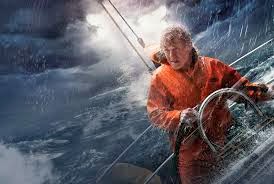
All is Lost
Recently, I saw the
movie All
Is Lost with Robert Redford
who plays the only character in the movie with almost zero dialogue. Many
say its’ his best part of his long acting career and worthy of an Oscar. His
character is a skipper of his own yacht sailing all by himself in the middle of
the desolate Indian Ocean.
His boat hits a floating shipping container causing
a huge gaping hole. We discover he is a very experienced sailor who promptly
repairs the hole and prepares for whatever will come next.
The rest of the movie is an incredible story of survival
against the elements. Although we hear him yell out "help"
to passing freighters and say, "this
is the Virginia Queen with SOS over," we do not know his name, but for
almost two hours we’re stranded right along with him in his boat.
At a critical moment when all certainly seems lost, the man, disheartened and desperate, utters one of the only two words he will say in the entire film. Head bowed, he moans, "God." Is it a prayer of despair? A cry for mercy? Or for a miracle?
We watch a man think. You can tell he is seeking solutions
and considering his next move. But he's also contemplating his dire circumstance.
You forget Redford is acting, and you just see a man fighting for his life. Maybe
you can relate?
Don’t miss the first
few poignant minutes. While he only says a few words in the entire movie in
the very beginning of the movie on a still blank screen, before we see the man
or his boat, we hear Redford in a very brief voice over, setting the scene.
Here's a portion of that opening monologue:
"I'm sorry,"
he says. "I know that means little at this point, but I am. I tried, I
think you all would agree that I tried. To be true, to be strong, to be kind,
to love, to be right. But I wasn't . . . All is lost here . . . except for soul
and body . . . that is, what's left of them.
"It's
inexcusable, really, I know that now. How it could have taken this long to
admit that, I'm not sure. But it did. I know it now, and I'm sorry. I did not
want to go, I still don't, I fought till the end, I'm not sure what that is worth,
but know that I did. . . I’m sorry. “
And so the movie begins.
What’s he thinking about when he says these words? Sorry for
what and to whom? Is he hinting at a confession? Seeking forgiveness? Reaching
for redemption? Writing his last words to put in a bottle?
He made us think? Could
we be writing similar words given the right circumstances. What would be your
last words to those that matter to you?
In an article in the New Yorker adapted from his book about
911 Jonathan Safran Foer writes,
“Hundreds of phone calls were placed from the twin towers between the time the first plane hit and the time that the north tower collapsed. When words should have been most impossible to find, there were words of grace, and dignity and consolation. Mostly words of love.
If we really want to understand the truth of this event and what it can teach us about our own lives we should look to the men and women who saw that death was near who called home on their cell phones. And not to express anger or fear or bitterness but simply to say 'I love you, take care of the children, have a good life.”
“Hundreds of phone calls were placed from the twin towers between the time the first plane hit and the time that the north tower collapsed. When words should have been most impossible to find, there were words of grace, and dignity and consolation. Mostly words of love.
If we really want to understand the truth of this event and what it can teach us about our own lives we should look to the men and women who saw that death was near who called home on their cell phones. And not to express anger or fear or bitterness but simply to say 'I love you, take care of the children, have a good life.”
What can we learn
from All is Lost and the callers from
911? Don’t wait for a eulogy to say words of affirmation and love to those that
matter to you. Tell them now, not only will they greatly appreciate it, it
could change their life.
With Hope and
Healing,
Mark
Labels:
Facing Adversity,
Losses,
Redemption,
Stress,
Words
Sunday, November 3, 2013
The Wise Peacemakers
In 1934, Hitler’s plague of anti-Semitism was spreading
throughout Europe like wildfire. Some would escape it. Millions would die from
it. But an 11-year-old boy named Heinz would learn from it. Heinz was a Jew who
lived in the Bavarian village of Furth with his family.
As tension mounted between the Jews and Germans in that community,
Heinz’s father, a school teacher lost his job, and his family endured great
hardship. Gangs of Hitler Youth roamed the neighborhoods of Furth looking for
trouble. Young Heinz learned keep his eyes open for them. Whenever he saw gang
of troublemakers, he would cross to the other side of the street. Sometimes he
would escape a fight, but sometimes he couldn’t.
One day Heinz found himself face to face with a Hitler Youth.
A beating appeared inevitable, but on this day he walked away unhurt, not
because he put up a good fight, but because of what he said. Somehow he
convinced this troublemaker that a fight was foolish and unnecessary.
From that point on eleven
year old Heinz learned the power of words to avoid conflict, and for a young
Jewish boy living in such a volatile anti- Semitic climate, that was a skill he
used often. In fact, it was a skill he perfected. Fortunately Heinz and his
family escaped Bavaria and made their way to America.
As the years have passed, his name has become synonymous with peace negotiations. Though he is still very much alive today, he will be remembered as on the greatest peacemakers of this century. You don’t know him as Heinz. You know him by his Anglicized name, Henry…Henry Kissinger.
Another mark of the wise seen Proverbs is that they
Are Peacemakers
A king's wrath is a messenger of death, but a wise man will appease it… Mockers stir up a city, but wise men turn away anger...Reckless words pierce like a sword, but the tongue of the wise brings healing. Proverbs 16:14; 29:8; 12:18
Blessed are the
peacemakers, for they will be called children of God. Matthew 5:9
We have looked at the characteristics of the wise in our last several
blogs, but what does it take to become wise? Join us next time as we explore the
answer.
Mark
Mark
Labels:
Facing Adversity,
Faith,
Hope,
Life Purpose,
Wisdom,
Words
Sunday, September 15, 2013
Wise Words
Last time
we looked at how the emotional and mental consequences of our words can be
liberating or can distance us from others. Our words can bring healing or a curse.
All of us can improve upon the words we choose. Being reminded of a four dynamics about the power of our words can change
things and prevent broken relationships.
First, talking too
much can get us into deep trouble.
Countless people have said way too much too often and have alienated themselves from others. Solomon had some good advice about our words, “Do not be quick with your mouth, and do not be hasty in your heart to utter anything before God. God is in heaven and you are on earth, so let your words be few. Much dreaming and many words are meaningless.” Ecclesiastes 5:2, 7
God desires to help us control ourselves when we speak. If you a have tendency to talk too much, think again. Maybe Calvin Coolidge had Proverbs 10:19 in mind when he said, “I have noticed that the nothing I’ve said did not harm me.”
In a multitude of words sin is not absent, but he who refrains his lips is wise. Prov.10:19
Talk less, listen more.
Secondly, angry words
can push people away from us.
Reckless words pierce like a sword. Pro.12:18
Despite our rationalization of how, why and what we have said we need to be careful what we say. None of us are exempt from blowing it. Angry and vindictive words, gossip or sharing confidential information have permanently ruined relationships and have cost people their jobs.
An angry person stirs up conflict, and a hot-tempered person commits many sins. Prov. 29:21-23
Reckless words pierce like a sword. Pro.12:18
Despite our rationalization of how, why and what we have said we need to be careful what we say. None of us are exempt from blowing it. Angry and vindictive words, gossip or sharing confidential information have permanently ruined relationships and have cost people their jobs.
An angry person stirs up conflict, and a hot-tempered person commits many sins. Prov. 29:21-23
He who covers over an offense promotes love, but whoever repeats the matter separates close friends. Prov.17:9 See Prov.16:28; 26:22; Ecc.7:21-22
Thirdly,
our words can influence others for good.
The lips of the righteous nourish man… From the fruit of his lips a man is filled with good things as surely as the work of his hands rewards him. Prov. 10:21; 12:14
Fourthly, our words affect our future. Mere words can never substitute for deeds. Some use words all their life without real change. We’re not talking about vocabulary or techniques, but getting control of our hearts. For out of our heart the mouth speaks…God help us.
If you want win the war of words it will involve choosing your words CAREFULLY. You and I need to define the art of listening and being slow to speak. It’s not just about the words you speak, but about the words you choose not to speak. Is what you’re about to say true, confidential, kind, or necessary?
Here are some very impacting words from the Apostle Paul that we all would do well to practice,
Do not let any unwholesome talk come out of your mouths, but only what is helpful for building others up according to their needs, that it may benefit those who listen. Ephesians 4:29
Which of the 4 dynamics resonated with you the most? Your comments are encouraged and appreciated.
Mark
Thursday, September 5, 2013
The Impact of Our Words
Rabbi Joseph Telushkln, author of Words That Hurt, Words That Heal, has lectured throughout country
on the powerful and often negative impact of words. He often asks audiences if
they can go 24 hours without saying any unkind words about, or to another person.
Invariably, a small number of listeners raise their hands with a “yes.” Others laugh, and quite a large number call out. “no!” The Rabbi says that, “If you cannot go 24 hours without saying unkind words about others, then you have lost control over your tongue.”
Words do have the power to heal or to harm. The tongue has the power of life and death,
and those who love it will eat its fruit (Prov. 18:21). Our words can bring
delight or destruction, hurt or encouragement What kind of words do you speak?
All of us have said things we wish we hadn’t.
Our words can be
liberating or distance us from others who are closest to us. If you speak when
you’re angry and you’ll make the best speech you’ll ever regret. Proverbs tells
us that out of the overflow of our heart the mouth speaks.
Words mean a lot to God. He created the world with His
spoken word. God says He hates hurtful
words (Prov.6:16-19),
but that encouraging words are like “apples
of gold in settings of silver” (Prov. 25:11). That sounds nice, but
apparently difficult to do. Many never
learn to control their tongues.
James says that our tongue can be as destructive as a forest
fire (James
3:5-6).
After a South Dakota fire had burned over
80,000 acres Janice Stevenson
told federal investigators that, ”after the match that I threw on the ground started a small fire, rather
than putting it out I drove away.” The Bible says our words can be just as
destructive.
Our words can promote
healing by understanding and changing their impact.
First, we need to understand the emotional and mental impact of our words.
Reckless words pierce like a sword…Prov. 12:18a Words injure us, they get inside of us. They can be unintended verbal terminators that can break someone’s spirit. What about you, have you ever wished you could take some of your words back? Before you speak consider…
Gentle words are a tree of life; but a deceitful tongue crushes the spirit (Prov.15:4). The tongue of the wise brings healing (Prov.12:18b).
Worry weighs a person down; an encouraging word cheers a person up…Everyone enjoys a fitting reply; it is wonderful to say the right thing at the right time…Kind words are like honey— sweet to the soul and healthy for the body. Prov. 16:24 Prov. 12:25; 15:23; 16:24
Secondly, our words impact our relationships.First, we need to understand the emotional and mental impact of our words.
Reckless words pierce like a sword…Prov. 12:18a Words injure us, they get inside of us. They can be unintended verbal terminators that can break someone’s spirit. What about you, have you ever wished you could take some of your words back? Before you speak consider…
Gentle words are a tree of life; but a deceitful tongue crushes the spirit (Prov.15:4). The tongue of the wise brings healing (Prov.12:18b).
Worry weighs a person down; an encouraging word cheers a person up…Everyone enjoys a fitting reply; it is wonderful to say the right thing at the right time…Kind words are like honey— sweet to the soul and healthy for the body. Prov. 16:24 Prov. 12:25; 15:23; 16:24
For many of us our mouth has been the shipwreck of many of our relationships. All of us have blown it, so tune and listen. We all need to be far more careful with our words and to whom we speak them to.
British shock jock Tim Shaw may have finally learned a valuable lesson about the consequences of our words. While working his usual 10 p.m. to 1 a.m. shift, Shaw told the pin-up girl he was interviewing—on air—that he was willing to leave his wife and two kids for her.
Minutes later, his wife Hayley, created an eBay auction for her husband’s car, a Lotus Turbo. The auction page was almost completely blank except for a picture of the car and the following words: “I need to get rid of this car immediately—ideally in the next 2-3 hours before my cheating jerk husband gets home to find it gone and all his belongings in the street, you can pick it up tonight.”
The car-valued at approximately $45,000-was listed with a Buy-lt-Now
for fifty pence or about 90 cents. The auction lasted exactly 5 minutes and 3
seconds before anonymous buyer paid for it and drove away. A later interview
with reporters, Mrs. Shaw said that she was, “sick of Tim constantly disrespecting our family for the sake of his
act.”
When asked about the price of the Lotus she said, “I just wanted to get him back.” Four days after the car was sold, the anonymous buyer left the following feedback on Mrs. Shaw’s eBay account: “Thank you, Hayley, the car is excellent and thank your hubby.” What we say does have consequences.
Find out more how our words impact our present and future in
the next blog.
Question: How have the words of another—positive or negative—impacted your life? You can leave a comment below.
With Hope,
Mark
mark@markskalberg.com
Subscribe to:
Posts (Atom)